

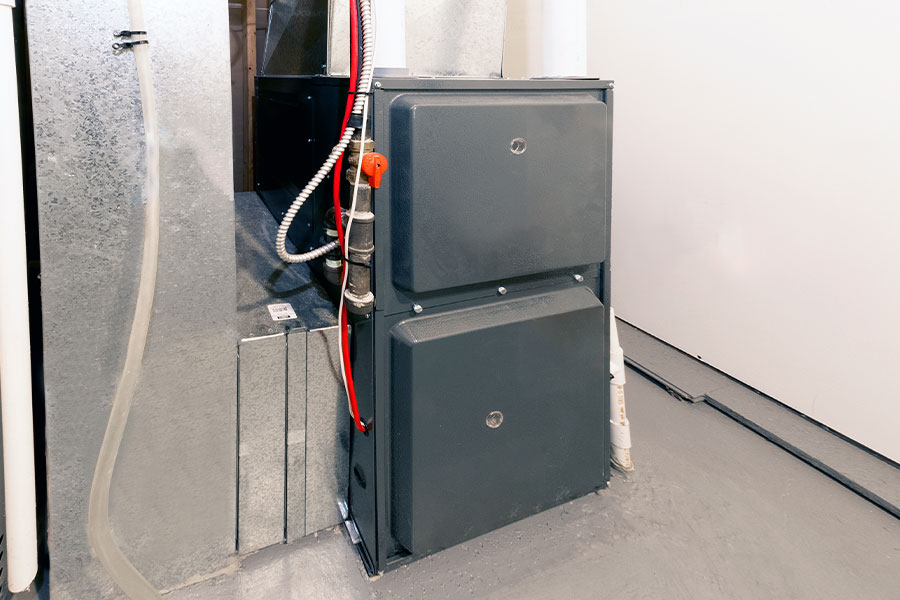
If your furnace will not start, three checks are safe for you to make first: confirm the thermostat is set to heat with the target temperature above the current room temperature, check the breaker panel or fuse for the furnace circuit, and look at the air filter along with the intake and exhaust vents for blockages. Together, they take about ten minutes and solve a real share of no-heat calls. Everything past that point, including the gas valve, ignitor, flame sensor, heat exchanger, and wiring, is technician work. Our diagnostic service calls are 100% free, so when those three checks come up empty, calling us costs you nothing.
Is the Thermostat the Problem? Start There
The thermostat is the first thing to check because it is the most common reason a furnace sits silent and the fastest one to rule out. Across Columbus service calls this time of year, we find plenty of furnaces in perfect working order waiting on a thermostat that never asked for heat. Our furnace repair work across Columbus starts with the same short list you can run yourself, in this order:
- Set it to heat: Confirm the mode is on heat, not cool, fan, or off. A shoulder-season week where both heating and cooling run leaves that switch in the wrong spot.
- Raise the target temperature: Push it three to five degrees above the current room reading. A one-degree gap can fall inside the thermostat’s deadband and the furnace never fires.
- Check the schedule: On a programmable thermostat, a setback period overrides whatever you just typed in. Press hold or override, then see if the furnace kicks on.
- Replace the batteries: If your thermostat takes AA or AAA batteries, swap in fresh ones. Weak batteries can keep the display lit while the signal to the furnace fails.
- Look at where it is mounted: A thermostat in a draft, in direct sun, or above a lamp reads the room wrong. The mid-century homes near Washington Street often have one in a hallway that no longer matches how the house is used.
- Restart a smart thermostat: Pull it off the base for thirty seconds and seat it again. A dropped Wi-Fi connection or a stalled update can leave it unresponsive.
If the furnace fires up during any of these steps, you are done. Let it run a full cycle and confirm warm air reaches the rooms farthest from the unit.
Have You Checked the Power Supply, Breakers, and Fuses?
Your furnace needs electricity even if it burns gas, so the second check is power. A tripped breaker or a flipped service switch stops a healthy furnace cold, and both take a minute to inspect.
- Find the furnace service switch: There is usually a switch on or near the unit that looks like a light switch. Anyone carrying boxes past it in a basement can knock it off without noticing.
- Confirm the unit is plugged in: A loose plug at a nearby outlet behaves the same as no power at all.
- Check the breaker panel: Look for a breaker labeled furnace, heat, or HVAC that sits between on and off. Push it fully off, then firmly back on.
- Check for a blown fuse: Older panels and some control boards use fuses. A replacement of the same rating is an inexpensive fix that can bring the heat right back.
- Reseat the blower door: Many furnaces cut power when the access panel is not fully seated. If someone changed a filter recently, press it until it clicks.
One firm limit here. If the breaker trips again right away, leave it off. A breaker that will not hold means something is drawing more current than it should, which points to a motor, a control board, or wiring. That calls for professional furnace repair, not another reset. Resetting a breaker on a shorted circuit is how a no-heat call turns into a much larger repair.
What Should You Look For Around the Furnace Itself?
The third check is airflow, because a furnace starved of air will short-cycle, overheat, or refuse to start. Two parts of this are yours to handle and the rest is for a technician to evaluate.
- Clear the intake and exhaust vents: Check the PVC pipes on the exterior wall or the roof vent. Leaves, snow drift, nesting material, and ice all block them, and homes off State Road 46 with vents facing open ground catch a lot of blowing snow. Clear them by hand and keep a foot of space around each pipe.
- Pull and inspect the air filter: Hold it up to a light. If light does not pass through, replace it. A clogged filter restricts airflow, raises the temperature inside the cabinet, and trips the high-limit switch that shuts the furnace down. Most homes need a fresh filter every one to three months in heating season, and you can have your air filter replaced on a set schedule if remembering it is the hard part.
- Look, but do not touch: Rust streaks, water pooling at the base, soot near the burners, or a cracked flue connection all need a technician.
- Note what the ductwork is doing: Loose or disconnected runs in a crawlspace or attic dump warm air where you do not need it. Report what you see and a technician can seal it.
Here is the line to hold. Thermostat settings, breakers and fuses, filters, and vents are homeowner work. The gas valve, ignitor, flame sensor, heat exchanger, control board, and wiring are not. Those involve combustion, high voltage, or carbon monoxide risk, and they need a licensed technician with the right instruments. If you smell gas, leave the house and call from outside.
Getting ahead of this is why annual furnace maintenance matters. A fall visit catches a weak ignitor, a dirty flame sensor, or a tired blower motor while the weather is still mild, not during the first single-digit cold snap.
Frequently Asked Questions
How long should these three checks take?
Plan on about ten minutes for all three. The thermostat takes two or three minutes, the breaker and service switch about the same, and pulling the filter plus a walk outside to the vents covers the rest. If the furnace still will not start, you have handed a technician useful information instead of wasting the visit.
What if my furnace turns on but then shuts off after a few minutes?
That pattern is called short cycling, and it usually points to airflow or a safety limit rather than a failed furnace. Start with the filter, since restricted airflow overheats the cabinet and trips the high-limit switch. If the filter is clean and it still cuts out, the flame sensor, ignitor, or pressure switch is the likely cause, and each of those is a technician repair.
Does it cost anything to have someone come out in Columbus, IN, if these checks do not fix it?
No. We are the home of the free service call, so the diagnostic visit costs nothing whether or not you move forward with a repair. There is no penalty for running these three checks, coming up empty, and picking up the phone. You can contact our team today and know exactly what you are agreeing to before any work starts.
Why is one room colder than the rest?
Uneven heat is usually a distribution problem, not a furnace problem. We often find original ductwork sized for a smaller furnace or a different floor plan, plus additions tied into runs never meant to carry them. A technician can measure airflow room by room and say whether the fix is a damper adjustment or duct sealing.
Getting Your Heat Back On in Columbus, IN
A furnace that will not start on a January morning is unsettling, and these three checks give you a real chance to fix it before your coffee finishes brewing. Set the thermostat correctly, confirm the furnace has power, and clear the airflow. If all three look right and the house is still cold, stop there and let a technician take over. From the older neighborhoods near Mill Race Park to newer builds on the edge of town, we have served Columbus homeowners since 2018. Veteran-owned and operated, our 5.0 rating across 340-plus reviews comes from showing up, explaining what we find, and quoting it plainly before any work starts.