



AC & Furnace Air Filter Replacement in West Lafayette, IN
Home of the free service call
- Individualized HVAC Options
- Customer Satisfaction Guaranteed
- Veteran-Owned & Operated

Contact Us
our services:
- AC Compressor Repair
- AC Recharge
- AC & Furnace Air Filter Replacement
- AC Installation & Replacement
- AC Maintenance
- AC Repair
- AC Tune Up
- Ductless Mini Split Installation & Replacement
- Ductless Mini Split Repair & Maintenance
- Emergency HVAC Repair
- Furnace Installation & Replacement
- Furnace Maintenance
- Furnace Repair
- HVAC Duct Installation
- Heat Pump Installation & Replacement
- Heat Pump Maintenance
- Heat Pump Repair
- HVAC Installation & Replacement
- HVAC Maintenance
- HVAC Repair
What Your Neighbors Are Saying About Us
Why Regular Filter Replacement Matters
Your HVAC system moves a large volume of air through your home every day. Every bit of that air passes through the filter before it reaches the blower, the coils, and the rest of the system. Over time, the filter accumulates what it catches — and once it’s saturated, it stops doing its job effectively.
A clean filter protects your equipment. When air flows freely through the system, components run under normal conditions. When the filter is clogged, the system has to work harder to pull air through, putting extra strain on the blower motor and other mechanical parts.
A clean filter also keeps your indoor air cleaner. A fresh filter actively captures dust, pet dander, pollen, and other particles. A dirty one can actually begin releasing what it’s collected back into the air circulating through your home.
And regular filter changes protect your energy bills. Restricted airflow forces your system to run longer and work harder to reach your thermostat setting. Something as simple as a fresh filter can make a noticeable difference in how efficiently your system operates month to month.
Signs Your Air Filter Needs to Be Replaced
Filters don’t always come with an obvious warning when they’re due for a change. Here are the signs worth paying attention to.
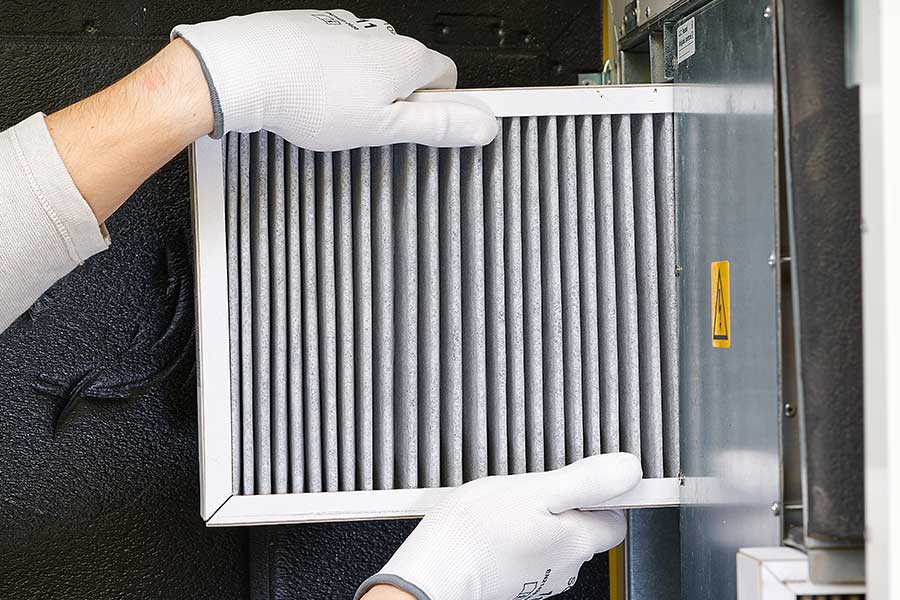
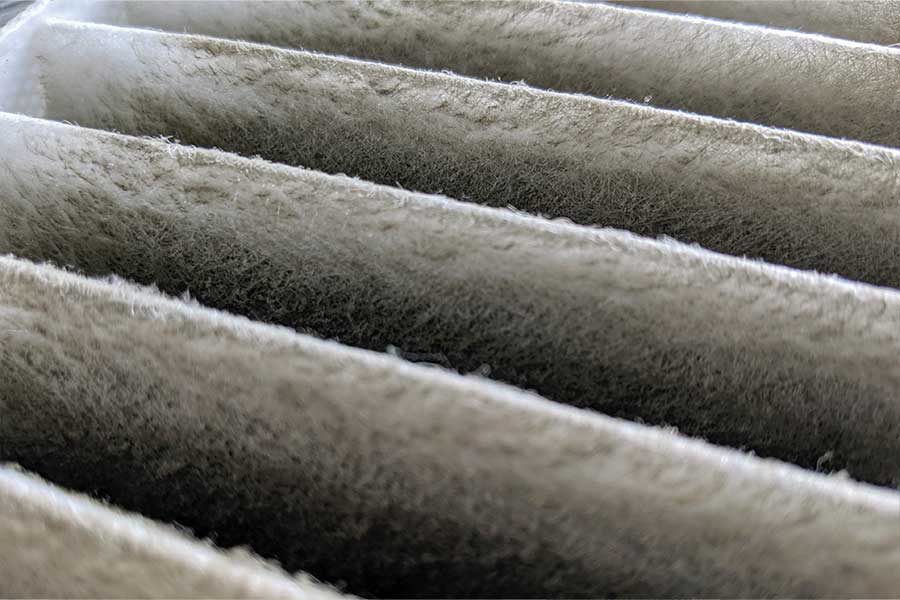
You can see that it’s dirty. Pull the filter out and hold it up to the light. A new filter is typically white or light gray. One that needs replacing will look visibly dark, matted, or clogged with debris. If you can’t see light through it easily, it’s time for a new one.
Your home is dustier than usual. If you’re noticing more dust settling on surfaces — especially near vents — your filter may be past the point of effectively capturing particles, or airflow problems may be causing buildup to bypass the filter entirely.
Your system is running longer cycles. When restricted airflow makes it harder to reach your thermostat setting, the system compensates by running longer. If your furnace or AC seems to be on more than it used to be, the filter is one of the first things worth checking.
Airflow from your vents feels weaker. Hold your hand near a supply vent when the system is running. If the airflow feels noticeably reduced compared to what you’re used to, a clogged filter is a likely contributor.
You can’t remember the last time you changed it. That’s reason enough. If it’s been more than three months — or longer than the manufacturer recommends for your specific filter type — go ahead and replace it.
Dangers of a Dirty Air Filter
A clogged filter isn’t just an inconvenience. Left unaddressed long enough, it can cause real damage to your HVAC system and your home.
System overheating is one of the most common consequences. When airflow is severely restricted, your furnace can overheat and trigger the limit switch as a safety measure — shutting the system down repeatedly. Over time, this kind of stress shortens the life of the heat exchanger and other components.
Frozen evaporator coils are a frequent result of restricted airflow in air conditioning systems. Without enough warm air moving across the coils, they drop below freezing and ice over — stopping the system from cooling and potentially causing water damage when the ice melts.
Blower motor failure becomes more likely when the motor is working against restriction continuously. Blower motors are designed to move air under normal resistance. Running constantly at elevated strain wears them out faster than they should.
Poor indoor air quality follows when the filter can no longer do its job. Dust, allergens, and other particles circulate more freely through your home, which matters most for anyone in the household dealing with allergies, asthma, or other respiratory sensitivities.
Higher repair costs accumulate over time. A neglected filter doesn’t cause a single dramatic failure — it contributes to gradual wear across multiple components. The cost of filter replacements over several years is a fraction of what those accelerated repairs and replacements can run.
Choosing the Right Filter for Your System
Not every filter is the same, and the right choice depends on your system, your home, and what you’re trying to accomplish.
MERV ratings are the standard measure of filter efficiency. MERV stands for Minimum Efficiency Reporting Value, and the scale runs from 1 to 16 for residential use. Higher numbers capture smaller particles — but they also restrict airflow more, which matters for your system.
Basic fiberglass filters, typically rated MERV 1 to 4, offer minimal particle capture and are primarily designed to protect equipment from larger debris. They’re inexpensive but offer little in the way of air quality improvement.
Pleated filters in the MERV 8 to 11 range are the most common choice for residential systems. They offer a good balance between particle capture and airflow, catching dust, pollen, pet dander, and mold spores without putting excessive strain on the blower.
High-efficiency filters rated MERV 12 and above capture smaller particles including fine dust and some bacteria. These can be a good fit for households with allergy sufferers or respiratory sensitivities — but it’s worth confirming that your system is designed to handle the added restriction before stepping up to a higher-rated filter.
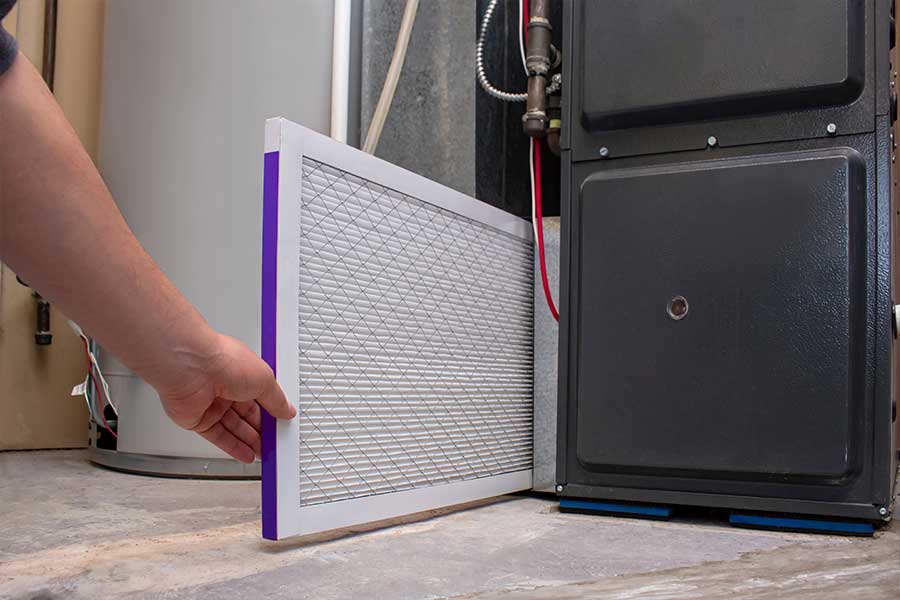
Filter size matters too. Using the wrong size — even one that’s slightly off — allows air to bypass the filter entirely around the edges, which defeats the purpose. The correct size is usually printed on the existing filter’s frame.
If you’re not sure which filter is right for your system, we’re happy to help you figure it out when we’re out for a service visit.
Why Choose Hoppy Heating & AC Repair
We’re a local, owner-operated company serving West Lafayette and the surrounding communities in Tippecanoe County. Filter replacement might seem like a small thing, but it’s part of the larger picture of keeping your HVAC system running well — and it’s something we take seriously as part of every maintenance visit we do.
When we’re in your home, we check the filter as a matter of course. If it needs replacing, we’ll let you know and take care of it. If you have questions about what filter you should be using or how often to change it, we’ll give you a straight answer.
We treat every visit — big or small — with the same honesty and care. No upsells, no runaround, just practical help from people who know HVAC and want your system to run the way it should. As the home of the free service call, getting started with us costs you nothing.