

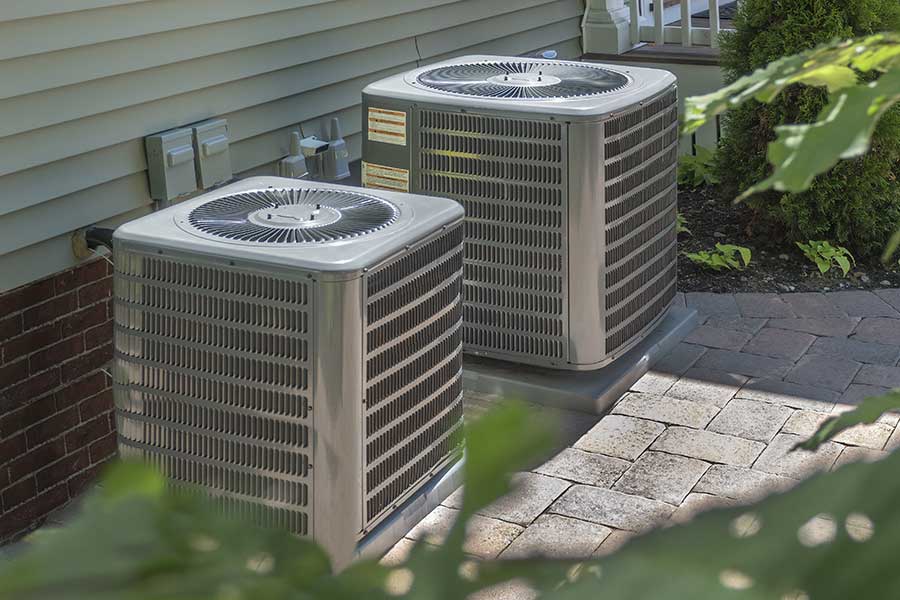
Yes. Heat pumps work in Indiana winters, and they already do in homes across Greenwood. Many current models keep heating well down to about 25 degrees, and cold-climate units pull heat from outdoor air down to around 5 degrees. On the few nights that fall below that, a backup heat source covers the gap.
What Is a Heat Pump and How Does It Work?
A heat pump moves heat instead of making it. In winter, it pulls warmth out of the outdoor air, even air that feels cold to you, and delivers it inside. In summer, it runs backward, pulling heat out of your house.
That shows up on your power bill. A furnace burns fuel or heats a coil to create warmth, while a heat pump only moves warmth that already exists, so it uses less electricity than traditional electric heating and produces fewer greenhouse gas emissions. Cold-climate models hold their output better as the temperature drops.
In our work throughout Greenwood, from the older houses around Old Town Greenwood to the newer subdivisions off US 31, homeowners who call us for heating repair across Greenwood ask the same two things: will it keep up, and what will it cost to run.
Can Heat Pumps Handle Indiana’s Cold Winters?
Yes, when the system is sized right, installed right, and backed up for deep cold snaps. Indiana throws a lot at heating equipment: single-digit stretches, freeze-thaw swings, and shoulder weeks where the heat runs at night and the AC runs by afternoon.
Heat Pump Efficiency Explained
A heat pump delivers more heat per unit of electricity than an electric furnace or baseboard heat, because it transfers warmth rather than generating it. That is what shows up as a lower bill from November through March. Sizing and yearly service protect it: an oversized unit short-cycles and wears out early, while an undersized one leans on backup heat, which is where high winter bills come from.
What Temperatures Can a Heat Pump Handle?
Many current models operate well in temperatures as low as 25 degrees, and some cold-climate units work effectively down to around 5 degrees. That covers the large majority of an Indiana winter, since a reversing valve pulls usable heat from outdoor air even when it feels bitter outside.
Insulation and upkeep decide how far your system stretches. When a heat pump falls behind at 20 degrees, one of those two is usually why, and professional heat pump repair traces it to refrigerant, airflow, or a control fault.
Do Heat Pumps Lower Your Heating Bills?
Most homeowners see lower winter bills after moving off electric resistance heat, since the system moves heat instead of creating it. The savings are not automatic, though. They depend on sizing, ductwork, and whether the system gets serviced before each season. One yearly visit catches the dirty coil or weak capacitor that quietly pushes your usage up.
Year-Round Comfort: One System for Heating and Cooling
A heat pump heats in winter and cools in summer, so one system covers both seasons. That means one outdoor unit to maintain instead of two, one system to plan for at replacement time, and no space given up to a separate furnace and condenser. In April and October, you can go from heating to cooling in the same week, touching nothing but the thermostat. Because one system does both jobs, booking annual heat pump maintenance protects your heating and cooling in a single visit.
Are Heat Pumps Better for the Environment?
Yes. A heat pump burns no fuel at your house, so there are no combustion emissions on site, and it uses less energy overall.
Lower Energy Consumption Rates
Because a heat pump transfers heat instead of producing it through combustion, it uses less energy to hold your house at one temperature. Less energy used means a smaller bill and a smaller footprint at once.
Renewable Energy Sources
A heat pump runs on electricity, so it gets cleaner as the power supplying it gets cleaner. Add solar panels, or let your utility add wind and solar to its mix, and your heating improves without you touching the equipment.
Reduced Greenhouse Gas Emissions
Choosing a heat pump cuts emissions several ways at once:
- Lower energy consumption: heat pumps use less electricity than traditional electric heating systems.
- Reduced fossil fuel reliance: they draw heat from the air or ground instead of burning fuel indoors.
- Improved air quality: with no combustion, there are no exhaust byproducts inside or outside your home.
- Sustainable technology: most models pair cleanly with renewable electricity, shrinking the footprint further over the life of the system.
How Much Maintenance Does a Heat Pump Need?
Plan on one professional visit a year and a filter change every one to three months. Service intervals run longer than older systems demand, and the payoff is fewer surprise repairs and fewer cold Saturdays waiting on a technician. Many newer models also report performance to an app, so trouble shows up as a notification first.
Quiet Operation: Enjoy Peace and Comfort
Heat pumps run quietly, without the startup bang and ductwork rumble older systems make. The benefits show up in ordinary ways:
- Peaceful environment: no repeated hum or clatter cutting through the room.
- Better sleep: bedrooms stay quiet when the system cycles overnight.
- Steadier comfort: variable-speed models run longer at lower output, holding temperature evenly.
- Less stress: a quiet house is simply an easier house to live in.
Versatile Installation: Adapting to Your Home’s Layout
Heat pumps fit a wide range of layouts, whether you own a small ranch or a two-story build in the Center Grove area. The outdoor unit is compact, so placement stays flexible. Indoors, you can tie into existing ductwork or choose a ductless setup when adding ducts would mean opening finished walls. Either way, heat pump installation and replacement start with a walk-through of your house, not a guess off a spec sheet.
Tax Credits, Rebates, and Financing for a New Heat Pump
Incentives can reduce what you pay up front, but programs, amounts, and eligibility rules change from year to year. Rather than quote figures that may be stale by the time you install, here is where to check:
- Federal tax credits: check the current year’s rules for qualifying heat pump equipment and the paperwork you need at tax time.
- State programs: Indiana energy-efficiency programs come and go, so verify what is active before you count on it.
- Utility incentives: your electric utility may offer rebates or bill credits, handled utility by utility, so ask them directly.
- Financing through Hoppy: this is the one you can confirm today. We offer financing on new systems, so an installation can be paid over time instead of all at once.
We will tell you which incentives we know are active and which ones you need to verify yourself.
Why Choose Hoppy Heating & AC Repair for Your Heat Pump Needs?
The crew matters as much as the equipment, because sizing and setup decide how a heat pump performs for years. We have served this part of Indiana since 2018, and since our rebrand from Howard Heating and Air, the same team has kept the same approach.
- Veteran-owned and operated, with a 5.0 Google rating across more than 340 reviews and an Indiana license #82-4546305.
- 24/7 emergency service, because heat pumps do not pick convenient nights to quit.
- Free diagnostic service calls, so you get a real answer before you decide anything.
- Three Indiana locations, including our Carmel shop on Industrial Drive, which keeps our trucks close to Greenwood.
When you see our van in your driveway, the feeling should be relief. That is the standard we hold ourselves to on every call.
Frequently Asked Questions
Will a heat pump keep my Greenwood home warm in January?
Yes, for the large majority of the month. Many current models heat well down to about 25 degrees and cold-climate units down to around 5 degrees, which covers most Indiana winter days and nights. In the coldest stretches, the system calls on backup heat.
Do I need to keep my furnace if I install a heat pump?
Not always, but many Greenwood homeowners keep one as backup, a setup often called dual fuel. The heat pump carries the mild and moderately cold days, and the furnace takes over in a deep cold snap. Whether that fits your house depends on your current equipment and your fuel costs.
How often should a heat pump be serviced?
Once a year at minimum, and twice a year is better since the system runs in both seasons. Change the filter every one to three months in between. Skipped service is the most common reason a heat pump underperforms in cold weather.
How long does a heat pump installation take?
Most straightforward replacements finish in one day. Jobs involving ductwork changes, electrical upgrades, or several ductless indoor heads can run into a second day. We give you the timeline before we start.
Your Next Step Toward a Warmer Greenwood Winter
Heat pumps handle Indiana winters while cutting energy use, running quietly, and covering your cooling season on the same equipment. The ones that struggle were sized wrong, installed carelessly, or left unserviced for years.
If you are weighing a heat pump for your Greenwood home, or your current one is not keeping up on cold days, get in touch with our team and we will look at your house, your ductwork, and your options. Call (765) 230-5535 when you are ready.